Foodservice Equipment – Maintenance “Top 10” List

Maintenance is being treated as more than an afterthought in today’s restaurants, especially the big chains, and that’s a good thing.  The well-maintained restaurant is seen by all as a cleaner, safer place to eat and work.

Here is a Top 10 List to get you on your way to having a properly maintained kitchen:

  1. Read the warranty information supplied with each piece of new equipment to learn what the manufacturer recommends.
  2. Put all literature supplied in a three-ring binder.
  3. Assign the binder to managers and require new managers to review it.
  4. Prepare a one-page maintenance sheet and post it where it will be seen.
  5. List appropriate clean dates and a box to initial and date when cleaning is completed.
  6. Insist that managers pay attention to maintenance schedules.
  7. Post a list of local service agencies, their phone numbers, and which brands they cover.
  8. Upon start-up of a new facility, place a list in the front of the binder containing make, model, serial number and date, along with the service and warranty period for each piece of equipment.
  9. Set up service, cleaning, and inspection programs for all operational equipment with servicing agents.
  10. Set up a regular exhaust hood and duct cleaning program to prevent fires.

It is critical to get staff members involved in your company’s efforts to care for the equipment.

Here are just a few ideas:

  • Reduce the damage caused by carelessness, abusive behavior, and vandalism by holding the staff accountable for the condition of the equipment when they complete a work shift.
  • Eliminate dents and gashes caused by carts and mobile equipment by providing adequate clearance around equipment. It’s not smart design to have people transporting items through what seems like a maze.
  • Protect equipment with rails, guards, and bumpers, which are offered as accessories, for both fixed and mobile appliances.
  • Catch little problems before they turn into big ones, with a weekly or monthly check of all kitchen workstations. Look for missing screws, damaged or worn wires and cords, bent panels or hinges. Get them corrected promptly.
  • Make your staff aware of what maintenance costs the restaurant. Make maintenance the topic of some staff meetings, in addition to training sessions. Solicit opinions from the staff about improvements that could be made.
  • Make an effort to get “clean” utilities—that is, do everything you can to protect equipment from power spikes with surge suppressors; treat or filter incoming water and air.

Source:
Katsigris, Costas, and Chris Thomas. Design and Equipment for Restaurants and Foodservice: A Management View. Hoboken, NJ: Wiley, 2009. Print.
George Zawacki, senior associate, Cini-Little International, Inc. First appeared in Equipment Solutions, a publication of Talcott Communications Corp., Chicago, Illinois (March 2004).


BUILT.: Tuning Up Nashville’s Music City Center — Foodable Web TV Network

Source: BUILT.: Tuning Up Nashville’s Music City Center — Foodable Web TV Network

Can you picture a massive building with organic lines and curves that flow like the shapes of Nashville’s rolling hills or the Music City’s melodic sounds? With ceilings that mimic the patterns and structure of grand piano keys? Or rooms with walls that bend, filled with acoustics that make you feel as if you’re standing inside of a mandolin or guitar?

The movement and fluidity of music itself was the design inspiration for the Music City Center. This center takes on the idea of a city’s brand identity to a whole new level. And at 300,000 square feet of exhibit hall space, 60,000 square feet of ballroom space, and 1.2 million square feet of space in total, this convention center is music to any event director’s ears. The center was needed to bring new life and business into Nashville, and needed to expand in the city’s downtown urban setting, according to Charles Starks, the complex’s president and CEO. He wanted the center to look like nowhere else in the world.

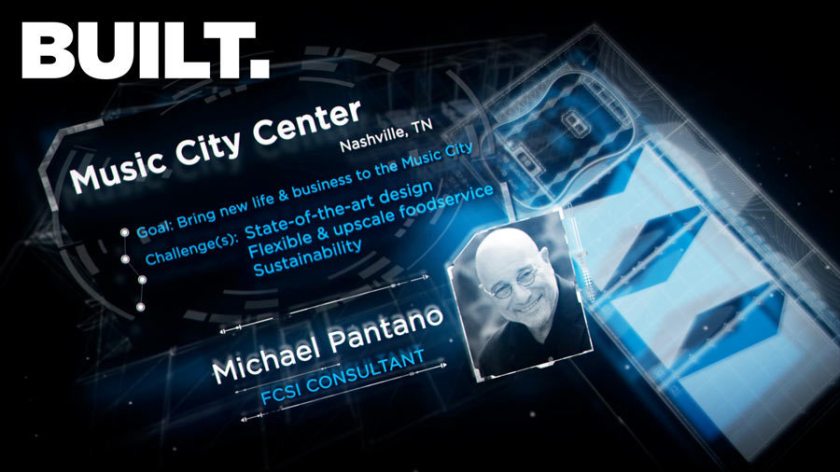
How did this design come to life? Through intense and creative collaboration. In this episode of “BUILT.,” in partnership with FCSI The Americas, watch to see how FCSI consultant Michael Pantano of Culinary Advisors, tvsdesign, and the visionaries behind the Music City Center worked in harmony to turn this building into the pinnacle of flexibility, sustainability, and foodservice excellence.

 The Challenge and Design

As the firm that led design for four out of five of the nation’s largest convention centers and for about 80 projects around the world, it’s no doubt tvsdesign knows their stuff. So, what are the most important aspects of a successful space? Functionality and foodservice, according to Rob Svedberg, principal of tvsdesign.

“One of the most important things that the customers respond to is the quality of foodservice, the range of the food offerings, and how well it’s presented and prepared,” Svedberg said.

This is where FCSI consultant Michael Pantano stepped in.

“I think it’s critically important that every kitchen [has] a professional designer involved. In most cases, I’d like to say that’s an FCSI consultant, because to achieve professional status, we had to demonstrate our competence and our body of knowledge, and our understanding of the entire process,” Pantano said.

One element that the designers of the Music City Center emphasized was the need for bright lighting. Pantano also took that to the kitchen, because as he said, chefs and cooks are people, too, and deserve to be proud of their workspace and equipment.

“Most kitchens are down in the bowels of a building some place because wherever daylight exists is premium space, so we worked very hard to keep things low to allow all of the daylight to come in. Extraordinarily uncommon, but very beneficial,” he said. “Foodservice really is throughout the building, woven into the very fabric of the building.”

Screen Shot 2016-06-24 at 2.52.52 PM.png
Screen Shot 2016-06-24 at 2.54.43 PM.png
In terms of functionality, Pantano always thinks like a chef. Aware that only 25 percent of a kitchen needs to be in fixed positions, whether due to the cooking line or exhaust hoods, he was able to make everything else mobile. Just as the entire convention center was flexible and fluid — without fixed concession stands or fixed dining areas so that the space could be reshaped — the kitchen could move with the needs of clients, too, able to fluctuate from serving six to six thousand.

“Our food sales have over doubled what we had projected initially and we’ve become known in Nashville as a place to go to for food. Not the convention center, but a place to go to for food,” Starks said.

The Future Through Sustainability

The beautiful architecture and foodservice aren’t the only things that set this design paragon apart from the rest. This space is also sustainable.

Above it lies a 4-acre green roof, the largest one in the Southeast, growing 14 types of vegetation. The center also has a solar farm and honey bees on site for the kitchens. The staff also keeps close relations with local farmers to serve food with a farm-to-table feel. The Music City Center also has a 360,000-gallon rainwater storage system that captures rainfall and utilizes it, not only to irrigate its plants and landscaping, but also to flush their sewage system. That has led to 54 percent saving in the building’s water usage in three years.

Watch the full episode now, and as Pantano states, discover how the Music City Center speaks for itself.

Why Does Every New Restaurant Look Like A Factory? : The Salt : NPR

The stripped-down look of exposed brick, poured cement floors and Edison light bulbs is popular in restaurants across America. One reporter dares to ask, “Seriously, why?”

Source: Why Does Every New Restaurant Look Like A Factory? : The Salt : NPR

Foodservice – Labor Savings

There are less and less bodies coming through that revolving door to staff your kitchen. It’s not just your operation; it’s all over the industry. Skilled labor that not only comes to work but stays at work is rare. You’re probably already trying to figure out how to do more with less because frankly you are forced to. The quality employees that you do have are performing more and more tasks as fewer team members are around to pick up the slack. Stress is boiling over and the bad moral is showing its effects. If you can’t fix the lack of labor issue, you may want to consider looking into foodservice equipment that can cut down on labor time, stress, and save you money while doing it all.

3 Chefs Smoked ChickenIt will take an investment, so when you make that investment, do your due diligences.  Find equipment that has a low operating cost, that has been tested for energy efficiency and will cut down on waste and pay for itself over time. Energy efficiency seems like it’s the last thing that you need to be worrying about, but think about it, if a piece of equipment is designed to earn you more money the longer it’s on, it had better be energy efficient right?  In fact, holding cabinets are some of the most energy efficient of any category of major kitchen equipment.
Cook and Hold OvensRetherm Ovens and hot food holding equipment have a major impact on streamlining your production process of a foodservice facility.  Having your menu items ready and on hand to serve, eliminates spikes in production and labor stress during your peak periods of service.  The result is less staff hours and lower labor overall costs.  Preparing large batches of food ahead of time reduces the employee skill level needed to achieve the same menu as a cook to order production.  The longer you can maintain high quality, flavor, and texture of your food while holding, the longer you can utilize that food product without sending it to the waste.  This means less food waste due to degradation of food quality and happier more satisfied “yelp friendly” customers as a result.

Large or “full-size” holding cabinets can become a key cog of a reduced touch or reduced labor foodservice production process. There is a whole spectrum of holding cabinet sizes available that will assist you with the different applications in your operation.  Pans of food can be removed from fryers, steamers or ovens and be placed directly into holding cabinets in order to avoid a cook/chill process.Bulk Food Holding HLC

Cooking with the intent to hold results in a more efficient production that often eliminates the need for some additional cooking equipment and staff.  The staff that is on hand, are now free to focus on service, so more orders can be taken with less labor during peak meal times.  Foodservice labor issues in commercial kitchens are forecasted to continue for the foreseeable future.  Stay positive and explore your options, your employees and pocketbook will thank you.

Why Good Bars Spray Your Beer Glass With Water | VinePair

Why do bars wash your beer glass before serving you? The answer has to do with more than cleanliness.

Source: Why Good Bars Spray Your Beer Glass With Water | VinePair

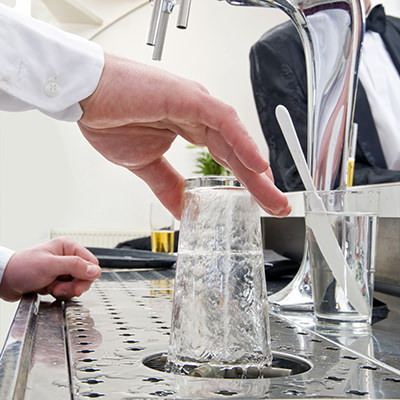
If you’ve ever visited a nice beer bar, you may have noticed a small sink your bartender uses to rinse your beer glass before serving you. That sink looks like this:

rinsing-beer-glass-inside

It’s called a star sink, or a glass rinser. You press the glass rim down into the glass rinser, which shoots a mist into it. It looks super cool and it’s also an efficient way to prepare a beer serving glass. However, you might be asking yourself, “Why doesn’t the bar just prepare clean glasses beforehand? Why rinse them right before serving me my beer?” Well, the glass cleanser doesn’t give your glass a thorough cleaning. Rather, it’s used to blast away away lingering dish soap, or other crud that accumulates when you’ve left a glass out for awhile.

But this sink actually serves a greater purpose than just cleaning your glass.

When you rinse a beer glass, it becomes more slippery, and there’s less friction when beer fills it. This allows a more even, clean pour and a substantial, fragrant head. As we’ve established before, beer foam is actually a good thing, because it carries a great deal of your beer’s aromas, and smelling is half the fun. The other benefit of rinsing a beer glass is that the spritz can cool the glass down, because we know that pint glasses often have the tendency to prematurely heat your beer up.

So, the next time you see your bartender rinsing your glass out, tip your hat in appreciation of a better-smelling, cooler beer. Cheers!

Published: July 21, 2015
By: Aliza Kellerman
Via: VinePair

Don’t Let Them Go to Waste: 5 Steps to Kick-Starting Your Sustainability Efforts — Foodable Web TV Network

Source: Don’t Let Them Go to Waste: 5 Steps to Kick-Starting Your Sustainability Efforts — Foodable Web TV Network

By Tarah Schroeder, FCSI, principal at Ricca Design Studios

Creating a sustainability program can be overwhelming for foodservice operators, as it often brings up questions and conversations beyond the realm of foodservice. And with so much information available, it can be difficult for operators to sort through the noise and  know where or how to start.  If you truly respect innovation, creativity, people, and problem solving to include sustainability in your culture, then turning broad sustainability goals into reality requires thoughtful commitment and careful preparation. Developing a plan is the best way to truly reduce your impact to the environment, as well as build a stronger internal and external community. Read on to learn about the steps any foodservice operation can take to embrace sustainability.

  1. Include sustainability in your mission statement.

A mission statement is a company’s touchstone, providing guiding principles that inform company objectives. Any restaurant or operation that wants to be more sustainable must start here to truly effect change in its culture before it can create achievable goals. Categories can include:

  • Resources — water and energy reduction
  • Community — waste as a resource, gardens, and Community Supported Agriculture (CSA)
  • Health — healthy menu options, healthy work environment

Snooze, an A.M. Eatery, a Colorado-based quick service restaurant chain serving breakfast and lunch, has created a mission statement of People, Profit, Planet, Pancakes to reflect both their culture and dedication to sustainability.  It is no wonder that they have high employee participation in waste reduction and energy-saving initiatives.

  1. Create a Baseline.


A baseline lets you know where you stand before making commitments on how to do lightsbetter. In the past, the first step would have been to look at peers’ energy performance. However, it is now understood that differences in menu, operations, and style of service, make it too difficult and inaccurate to compare restaurants to each other.

It is better for restaurants to develop their own baseline from which they can improve upon, such as audits for existing restaurants and energy models for new projects. There are varying levels of energy assessment. The American Society of Heating, Refrigeration, and Air-conditioning Engineers (ASHRAE) has created three levels of audits on their website.

A level one audit is an internal checklist that starts with utility bills, and then continues to building characteristics, such as lighting, refrigeration, kitchen ventilation, and cooking equipment.  A checklist can be used in conjunction with infrared thermometers and plug load data loggers, and many utility companies offer audit assistance. Overall, understanding these existing conditions are important because they provide a basis for recommending energy and water conservation measures.

A waste audit can be conducted much the same way, and the Environmental Protection Agency (EPA) has resources here. The first steps to creating a waste baseline are thinking about where your waste is going, how much and what type of waste is being generated, and where the majority of waste is coming from (pre-consumer versus post-consumer).

  1. Write a Performance Plan.

A performance plan translates sustainability goals into an action plan.  It takes short-term goals, such as retrofit and replacement decisions, and long-term goals, such as smart energy targets that can be reviewed and updated, and puts them into practice. Some examples of strategies for short-term goals include: implementing procedures to assure manual shutoff of systems after hours, timer shut-offs for load shedding, or consolidating preventative maintenance of like equipment. The Foodservice Technology Center is a great resource for strategies.

Long-term goals can be created based upon the baseline information with deadlines further down the road. For example, the goal might be to reduce energy use by 5 percent in four years. The strategies to achieve these goals could include a capital replacement program to purchase Energy Star-rated cooking and refrigeration appliances for replacement of old appliances on a life cycle cost basis, upgrading building automation system or metering to include kitchen systems, or creating a design protocol for any new buildings or projects that come online.

Harvard University was one of the first higher-education facilities to create a performance plan that had specific sections on dining services. This was due in large part to the President’s Climate Action Plan to reduce greenhouse gases by 30 percent by 2016. Some strategies they used to contribute to this long-term goal included:

  • New dishwashers that have saved over 500,000 gallons of hot water annually
  • 150-gallon stainless steel storage tank for waste vegetable oil
  • Diverting more than 95 percent of construction and demolition “waste” from landfills
  • Peak demand exhaust hood controls
  • Large skylights to improve lighting


Foodservice PotHere’s a simple step-by-step breakdown for creating performance plans:

  • Step One: Make a commitment
  • Step Two: Assess performance
  • Step Three: Create an action plan
  • Step Four: Implement the action plan
  • Step Five: Evaluate progress
  • Step Six: Recognize achievements
  1. Bring the right people together.

Sustainability champions are key to the success of any initiative, as they are enthusiastic about making change and will ensure that the conversation always stays relevant.

When building their new headquarters in Houston, Exxon Mobil wanted to make sure that sustainability and safety were important components of the overall project.  A sustainability group that included operations, maintenance, and design team members was formed to review high-level decisions from an environmental impact point of view. Capital improvements such as waste to energy strategies, that are often value engineered out of a new project, remained intact and contribute to a successful operation today.

  1. Re-evaluate and re-assess.

A plan can only work if it is constantly being updated and revised based upon current trends, culture, and circumstances.  If you take the initiative to follow these steps, the only way to keep it relevant is through re-evaluating and re-assessing your goals and strategies.

It is these purposeful steps that will help you create a culture shift that is focused on sustainability.

Recipe – Smoked Ice

I wanted to come up with a way to add smoked items to bar menus.  I have made Smoke Roasted Almonds and love them.  The problem is that they aren’t all that interesting.  I was talking to someone while bellied up at a bar about cocktails.  He was drinking Scotch on the rocks and I was drinking a Manhattan.  I explained that I love smoked food but really never cared for the smoky flavor in Scotch.  I thought, hey why don’t I try smoking some Makers Mark and make a Manhattan with it.  This stuck on my mind for a while.  I thought it was a great idea but maybe not the best drink to do it with.  I decided I would find away to infuse the ice with smoke so I could try a few cocktails.  The best by far was the Bloody Mary, so that’s what I took pictures of.

Smoked-Ice-Tall
Smoked Ice

Adding a smoky flavor to cocktails such as a Bloody Mary separates you as a bar.  As the cubes melt, more of the smoky flavor is released into the drink. This encourages you to take your time and enjoy every sip as the drink evolves.

INGREDIENTS

o 5Lb Cubed Ice
o 1c Hickory Wood Chips

PREPARING THE ICE:

  • Place the ice in a perforated pan on one of the upper trays.
  • Under the perforated pan place a hotel pan to catch the water.

SMOKING THE ICE:

  • Smoke the ice for 120 minutes.
  • The heat from the smoke will slowly melt the ice into the lower hotel pan.
  • As the ice drips it will become infused with smoke flavor.
  • Dilute this mixture with fresh water at a ratio of 4 parts clean to 1 part smoked
  • Refreeze in trays for cubed ice.

A great Bloody Mary recipe to add this ice toSmoked-Ice

8 oz good tomato juice
3 oz vodka
1 tbsp Worcestershire sauce
1/4 tsp celery salt
1 celery stalk
1 tbsp Sanford’s Kitchen All American Hot Sauce
fresh lime wedge
fresh ground black pepper

Serve over Smoked Ice and garnish with the lime, celery stalk, and ground pepper.

This makes such a delicious drink with a very unexpected flavor.  This recipe was made with an FWE / Food Warming Equipment Cook and Hold with Smoker

Lamb Barbacoa Taco’s

I came across this challenge while reading through some of the great forums that are on ChefTalk.com and could not resist.  The set it and forget it cooking method is always a plus during the work week, and it is also great in a professional kitchen.  No reason why we can’t bridge the two right?

Lamb-Barbacoa-Taco

Place a boneless lamb leg (NAMP234) in a slow cooker / hotel pan, season with Trade East Six Pepper Blend, add cooking liquid (Beef broth and Tropical Rub Glaze) to about half way up the roast.  Cook on Low /200F for 7-8 hours, and after it is cooked you can either take it out or hold it (if you are in a commercial kitchen) at 150 for up to 8 hours.

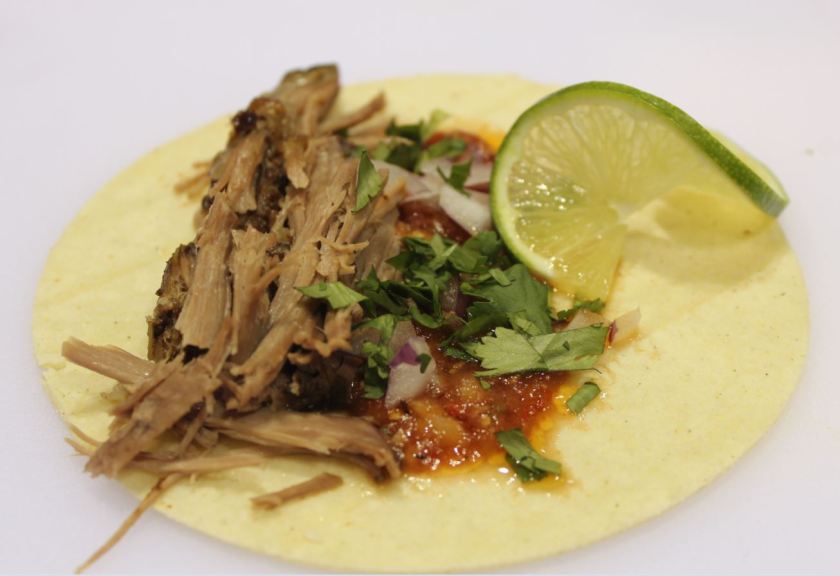
This lamb came out tender and juicy.  So tender my bear claws pulled right through it!  I spread it out on a warm taco with some freshly made hot salsa, red onion, cilantro and a squirt of lime juice.   These little spicy Lamb Barbacoa Tacos warmed my bones after shoveling some snow.

The oven I used was an FWE Cook and Hold, the great thing about it is, it can act pretty much like a crock pot on steroids.  You set it for a low temperature and time just like you would at home, plus you get to add a hold temperature that has a little more flexibility than the crock pot, but some idea.

pulled lamb with bear claws

2016’s James Beard Award Winners 

Jonathan Waxman, Eleven Madison Park, Suzanne Goin, and many more.

Source: 2016’s James Beard Award Winners — Grub Street

Tonight, the James Beard Foundation whittled down its list of finalists and honored America’s top culinary talent. Some notable winners: Shaya for Best New Restaurant, Maison Premiere for Outstanding Bar Program, Jonathan Waxman for Best Chef: NYC, Suzanne Goin for Outstanding Chef, and Eleven Madison Park for Outstanding Service. Check out the full list below — and congratulations to everyone. Continue reading “2016’s James Beard Award Winners “

FWE: Cook, Cool, and Conquer BBQ and More

Source: FWE: Cook, Cool, and Conquer BBQ and More

FWE cooking and refrigeration products enhance menu flexibility.

Innovation has driven Food Warming Equipment’s creativity for more than 60 years, and the company continues to develop better solutions for hotel F&B operations. Nate Sanford, FWE sales account manager and R&D chef, and Marketing Manager Martin Szalay recently shared why their new equipment offerings have gotten the attention of hotel foodservice operations. Continue reading “FWE: Cook, Cool, and Conquer BBQ and More”

Design a site like this with WordPress.com
Get started